
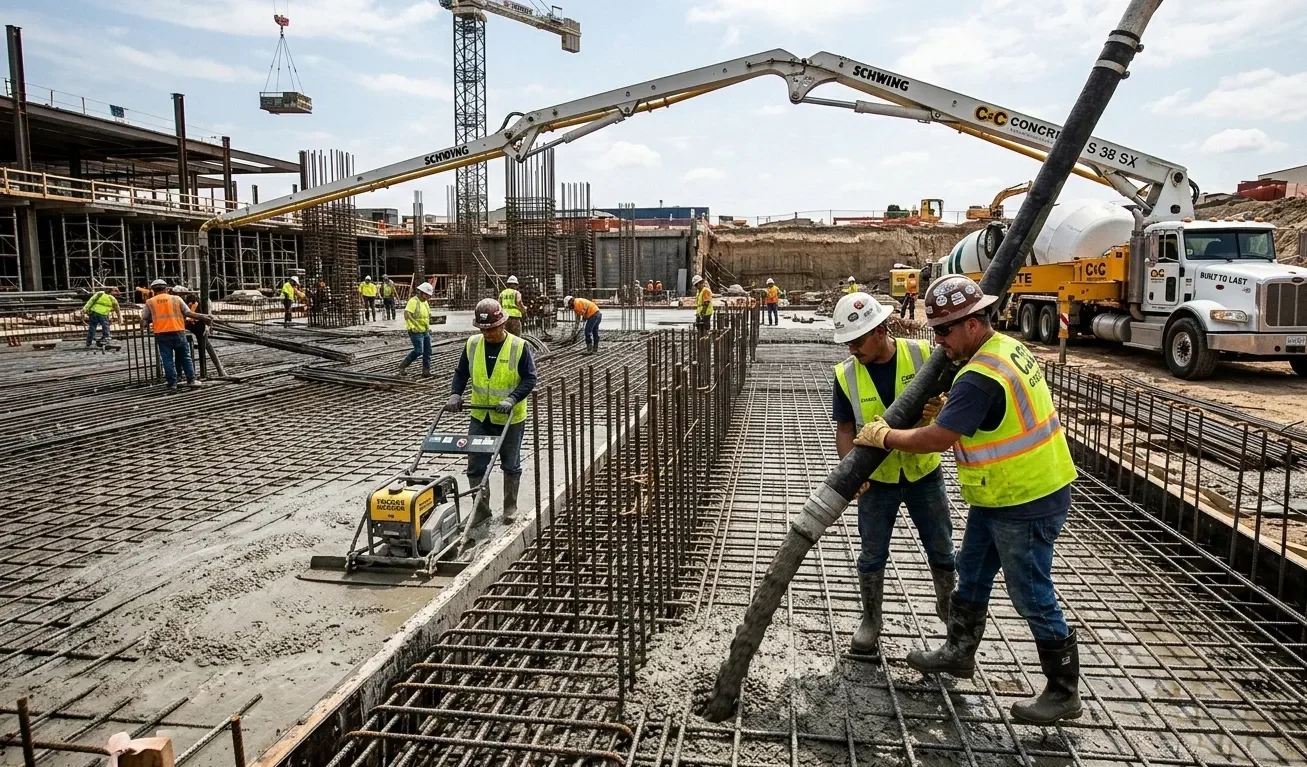
Concrete Shopper explains how additives improve set time and strength in cold-weather concrete pours, helping achieve reliable, durable results in winter.
Concrete performance is strongly affected by temperature, and cooler conditions across many Australian regions require careful planning to achieve reliable results. Cold weather concrete pours slow the chemical reactions responsible for setting and strength development, increasing the risk of delays, surface defects, and reduced durability if not properly managed. By understanding these effects and using appropriate additives, construction professionals can maintain consistent concrete quality even during winter conditions.
How Cold Temperatures Affect Concrete Set Time and Strength
Concrete hardens through a chemical process known as cement hydration. When ambient temperatures drop, this process slows significantly, directly affecting both set time and early strength gain. In cooler Australian conditions, particularly when temperatures fall below 10 °C, concrete may remain plastic for longer and take more time to reach critical strength thresholds.
Cold conditions can lead to several practical issues on site, including:
• Extended setting times, delaying finishing operations
• Slower early strength development, postponing formwork removal
• Increased vulnerability to surface damage if temperatures drop overnight
• Higher risk of long-term durability issues if curing is inadequate
How Concrete Additives Improve Performance in Cold Conditions
Concrete additives, also known as admixtures, are designed to modify concrete behaviour during mixing, placement, and curing, particularly in challenging conditions. In cold weather, these additives counteract the slowing effects of low temperatures on cement hydration by accelerating chemical reactions and improving internal structure. When correctly selected and applied, they provide a controlled solution that enhances early performance, maintains consistent quality, and reduces reliance on external heating or delays.
Accelerating Admixtures: Faster Set Times and Early Strength Gain
Accelerating admixtures are among the most effective solutions for improving concrete performance in winter conditions. These additives increase the rate of cement hydration, allowing concrete to set faster and gain strength earlier, even at lower temperatures.
In Australian construction, non-chloride accelerators are commonly used due to their compatibility with reinforced concrete and reduced risk of steel corrosion. Their benefits include shorter setting times, improved early strength, and reduced exposure to temperature-related damage during the initial curing phase. By achieving critical strength sooner, concrete is less susceptible to overnight temperature drops, and construction schedules can remain on track.
Best Practices When Using Additives for Cold Weather Concreting
While additives significantly improve outcomes, they are most effective when combined with sound construction practices. Proper planning and site management are essential to maximise performance during winter pours. Key considerations include:
• Working with local concrete suppliers
• Protecting freshly poured concrete with insulation or covers
• Monitoring temperatures during curing
• Compliance with Australian Standards
Working with experienced suppliers ensures the correct admixture and mix design are used. Protective measures and temperature monitoring support proper early curing, while compliance with Australian Standards helps ensure long-term structural performance.
Building Reliable Results with Concrete Shopper for Cold Weather Concrete Pours
Successfully managing cold-weather concrete pours requires the right combination of quality materials, technical knowledge, and reliable supply. At Concrete Shopper, we provide high-quality concrete solutions and expert support tailored to Australian conditions, helping you achieve consistent results year-round.
Whether you are planning a residential, commercial, or civil project, our team can assist with concrete products and additives designed to improve set time and strength in colder weather. Contact us to discover how our professional concrete solutions can support your next build with confidence.
Related Blog Articles:
Fibre-Reinforced Concrete: Crack Control for Driveways, Sheds, and Pathways
Air-Entrained & Fibre-Reinforced Concrete: When to Specify and Why